
The rules of digital discovery are undergoing a fundamental shift. As we move toward digital marketing in 2026, brands are no longer competing only for rankings on traditional search engines. Instead, they are competing for visibility within AI systems—large language models, AI assistants, voice agents, and autonomous recommendation engines that increasingly decide what information users see, trust, and act upon.
This shift marks the rise of AI Visibility as the new strategic priority, redefining how website SEO, AI content, and AI marketing must be approached.
Traditional SEO focused on keywords, backlinks, and page positions. While these elements still matter, they are no longer sufficient. AI-driven search systems do not simply rank links—they retrieve, summarize, and recommend content directly.
In 2026, users will increasingly receive answers without clicking websites at all. AI assistants will synthesize information from sources they deem authoritative, structured, and contextually reliable. If your brand’s content is not optimized for AI retrieval, it may never enter the decision-making loop—regardless of how strong your traditional SEO metrics are.
This is why AI-first visibility is becoming more important than classic SEO.
Among the most critical SEO trends for 2026 is the evolution from search engine optimization to AI optimization. This includes:
AI systems prioritize content that is clear, authoritative, well-structured, and consistently referenced across platforms. Brands that rely solely on keyword-heavy blogs without semantic depth will gradually lose discoverability.
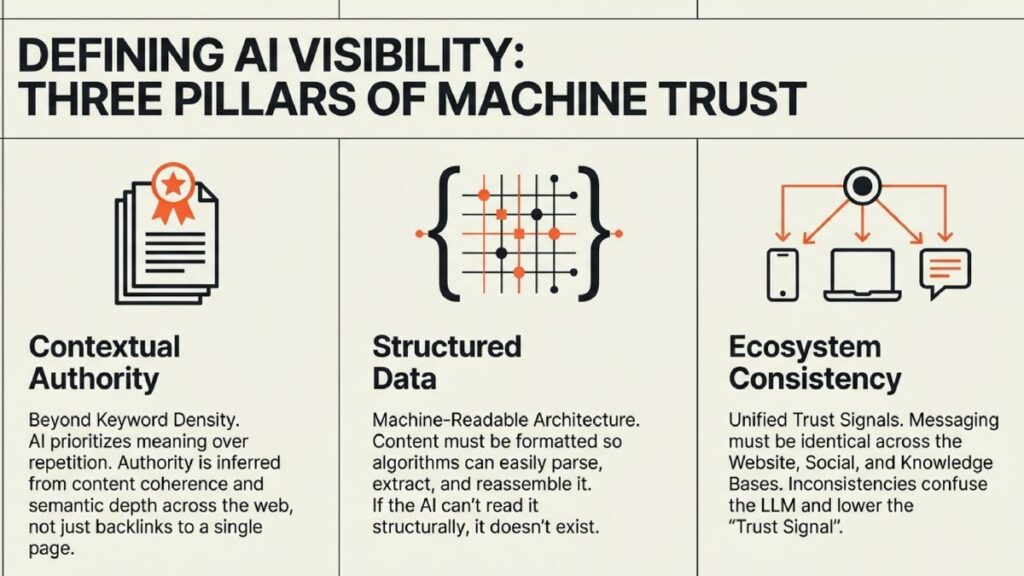
AI visibility directly influences how brands are surfaced during customer journeys. When users ask AI tools for recommendations, comparisons, explanations, or solutions, the AI selects brands it understands best.
This impacts discovery in several ways:
In essence, search performance in 2026 is no longer about traffic alone—it is about presence within AI-generated answers.
To remain competitive, brands must rethink how content is created and structured. AI systems prioritize meaning, not repetition. Content must clearly answer real user questions in a comprehensive manner.
Instead of isolated articles, create interconnected content clusters that establish topical depth and credibility. Clear headings, logical sections, definitions, and summaries improve AI comprehension and retrieval. Websites, blogs, social platforms, and knowledge bases should reinforce the same expertise and positioning. Content should be written in a way that AI can quote, summarize, and confidently reference.
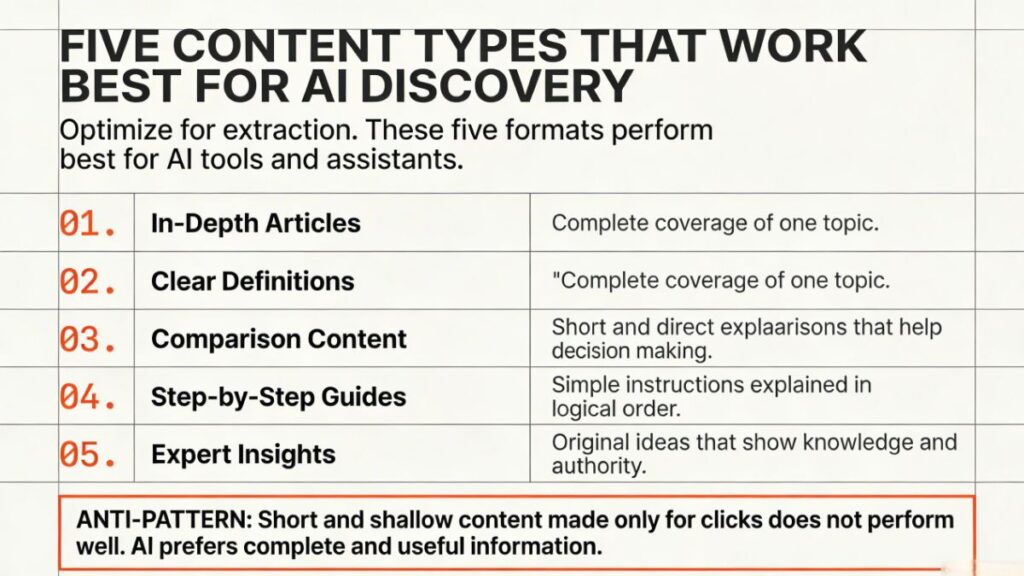
Not all content formats are equally effective for AI agents, assistants, and voice-based systems. In 2026, the strongest-performing formats will include:
Short, surface-level content designed purely for clicks will struggle. AI systems favor depth, clarity, and informational completeness.
AI marketing in 2026 is not about using AI tools for automation alone—it is about designing brand presence for AI interpretation. This requires alignment between marketing, content, SEO, and product messaging.
Brands that adapt early will benefit from:
Those that delay risk becoming invisible in an ecosystem where users increasingly rely on AI as their primary interface to information.
AI visibility is not a future trend—it is an active shift already reshaping digital discovery. As SEO trends for 2026 continue to evolve, brands must move beyond traditional optimization models and embrace AI-centric strategies.
In the coming years, success will not belong to brands that rank the highest—but to brands that AI understands, trusts, and chooses to recommend.